
A client had built an automated intake system. A real one, on a proper project management platform, not a spreadsheet with delusions of grandeur. Requests came in, got categorized, got routed, got assigned to a named human being. There were dashboards sitting on top of it. From the outside it looked finished.
I asked what the business rule was for one of the assignments. Why does this kind of request go to that person.
Nobody had an answer.
I want to be careful here, because this is the part people brace for and it's not what happened. There was no bad faith anywhere in that room. Everybody looked like they were doing what they were supposed to be doing, and I think they mostly felt like they were too. The system said the request goes there, so the request went there. Somewhere back at the beginning a person had made that call for a reason, and the system had been faithfully repeating it ever since, and by the time I showed up the call had no author. It had a process step instead.
My honest suspicion is that some of those routing rules were set up without anyone telling the people on the receiving end, and that the resulting alerts have been landing in inboxes already buried under the usual large-organization noise. Which would mean some of those assignments have owners who don't know they own anything.
That's a different problem from the one everybody expects me to find, and it's much harder to see, because on paper it looks solved.
Assignment is cheap. Ownership is expensive.
Naming an owner takes about four seconds. It is a field on a card. Somebody types a name, the tool records it, and from that moment forward every report you generate will show that this thing has an owner, which means every report you generate will tell you that this is handled.
Actual ownership costs considerably more than four seconds. It means that person can decide something without asking. It means when the situation stops matching the plan, they are permitted to change the plan. It means when it goes wrong, the conversation ends at them rather than passing through them on its way somewhere else.
Those two things use the same word and they are not related. Most of the tooling any of us buy is extremely good at producing the first one, at scale, with an audit trail.
Every system I have ever been handed could tell me who a thing was assigned to. Not one of them could tell me whether that person had any authority over it, whether the assignment still made sense, or whether they had even noticed.
Frankly, this is all just process theatre. Everything a process is supposed to have, present and correct. Owners named. Steps documented. Reporting clean. And underneath it a set of decisions nobody made recently, being executed by people who were never told they were deciding anything.
This is how an Operator Vacuum forms without anybody doing anything wrong. Not an empty seat on the org chart. A seat that's filled, on paper, by someone who was never handed the authority that would make filling it mean something.
Two people described this to me last week without meaning to
I went looking to see whether this was just me being cranky about one client, and it isn't.
Four days ago someone posted in r/Leadership, unprompted, describing the same thing from the other side of the desk. He'd had contingency plans that looked great on paper, and then something actually went wrong: everyone knew what the plan said, but nobody was quite sure who had the authority to make the decision. And while everyone was working that out, the problem kept getting bigger.
He lands somewhere sharper a few lines later, naming what he'd accidentally built: asking for initiative while still requiring permission.
Then yesterday a former colleague of mine, Darren Smith, published a long piece on why organizations stop scaling, and got to the same place from the org-design direction. His version of the mechanism is the cleanest statement of it I've read: organizations delegate responsibility much faster than they delegate authority. The language changes before the power structure does.
One of his section headers is "Accountability without authority is theatre."
I want to be honest that I sat with that for a minute. I've been calling this process theatre for months, and here's someone I used to work with reaching for the same word about the same underlying thing. Either we're both wrong in the same way, or this is more common than either of us is comfortable with.
You find out at the worst possible moment
Here's why this stays invisible for so long.
An assigned owner and a real owner behave identically right up until the process runs out of substance and authority to fall back on. Work comes in, gets routed, gets done, gets closed. The dashboard is green. Everybody's a hero.
The difference only shows up when reality stops cooperating. A customer escalates, a dependency slips, two priorities collide, a number goes the wrong direction. That is the moment the job stops being "execute the thing that was decided" and becomes "decide what should happen now." And that is precisely the moment you discover whether the name on the card was a decision-maker or a routing destination.
I saw a clean version of this with a different client. They had a gate review in their release process. A real gate, documented, with a named reviewer whose job was to hold it. He approved things. Consistently, promptly, on schedule. Months later, when the whole project was being autopsied, the founder put it about as plainly as anyone could: he did not hold the gate. He rubber stamped it. He hadn't thought it through.
There was no missing process. The process was fine. The process was, if anything, immaculate. What was missing was a person who understood that saying yes was a thing they were accountable for, rather than a step they were assigned.
The numbers are worse than the stories
Product Focus's 2026 survey of the product management profession found that 34% of product professionals have no clear primary metric they're accountable for. A third of the people whose entire function is owning a product outcome cannot name the outcome they own.
The same survey found something else that explains a lot: the people who report a weak company strategy are 15 points more likely to have no clear metric. 44% versus 29%. The metric ownership doesn't fail on its own. It fails because there's nothing above it to attach to.
I'm currently inside a large portfolio where this is the whole shape of the problem. There's no meaningful line drawn between any given project and an outcome, a value, a number that moves. No departmental north star to roll anything up to. So the reporting becomes a laundry list of things being delivered, and that's it. Everyone can tell you what shipped. Nobody can tell you what it was for.
And here's the part that makes it genuinely uncomfortable rather than just untidy: that same survey found 92% of product leaders are now accountable for revenue, nearly double the share from 2022. So accountability is expanding fast, and the ability to define what success even means is not keeping pace with it.
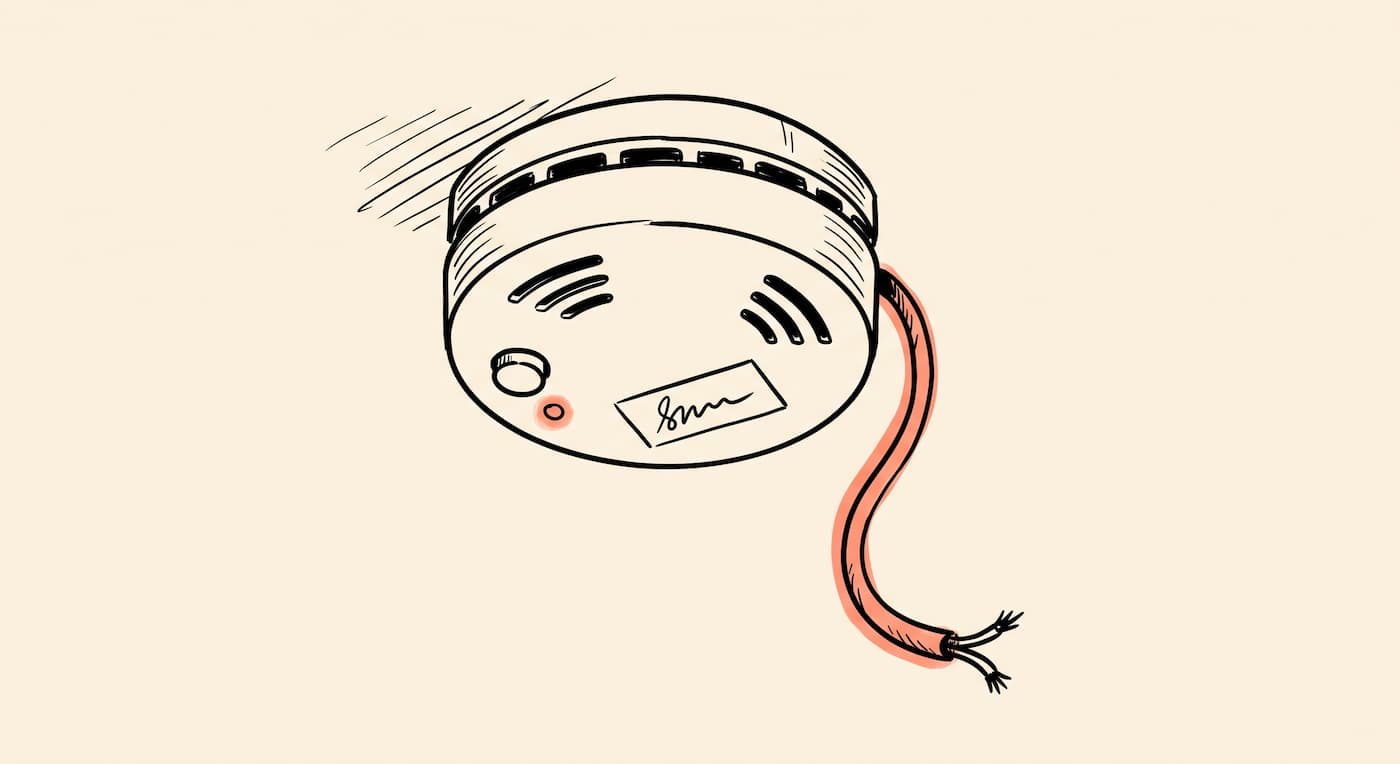
That gap has a shape. Someone is on the hook, someone will be asked about it in the quarterly review, and nobody involved has been given authority over the inputs. It looks like ownership on an org chart and it functions like a smoke detector wired to nothing.
Ten minutes, five names
So how do you tell an assignment from an owner in your own org?
Don't audit the tool. The tool will pass. The tool is designed to pass.
Pick one name on your board. Any one. Then ask what that person is allowed to decide on their own.
If the answer is a sentence, you have an owner. "She can pull anything out of the sprint without asking me." "He can tell a customer no."
If the answer takes a paragraph, or starts with "well, it depends," or turns into a description of who they'd escalate to, you don't have an owner on that thing. You have an assignment, and a person who is going to be surprised and slightly betrayed the first time something breaks and they get asked why they didn't handle it.
Run that on five names. It takes ten minutes. I'd be genuinely interested to know how many sentences you get.
Somebody has to be allowed to decide
I'm not going to tell you how to fix the ones that come back as paragraphs, because the honest answer is that it depends on things I can't see from here, and because the fix is rarely a tooling change or a process change. It's a conversation about who is actually permitted to make a call without checking first. Sometimes that's one conversation with the founder. Sometimes it's several conversations across several leaders before anything resembling real alignment shows up. Sometimes it's somewhere in between. It depends entirely on the org.
What I will say is that this is a big part of the job of the Operator Seat. Tracking work, routing it, and reporting on it are all real jobs, and a good system will do all three better than a person can. What no system does is sit in the gap between the plan and the world when those two stop matching, choose what happens next, and carry that choice afterward. That part has never been automatable, and buying better tooling has a way of making it look like it was.
The uncomfortable version of all this is that a really good intake system, a really clean board, a really well-designed process, will hide this from you longer than a messy one would. Chaos at least tells you something is wrong. Process theatre just keeps producing green dashboards right up until the week it doesn't.
Go ask about five names. See how many sentences you get.